TLMNI Funded Programmes: Mozambique
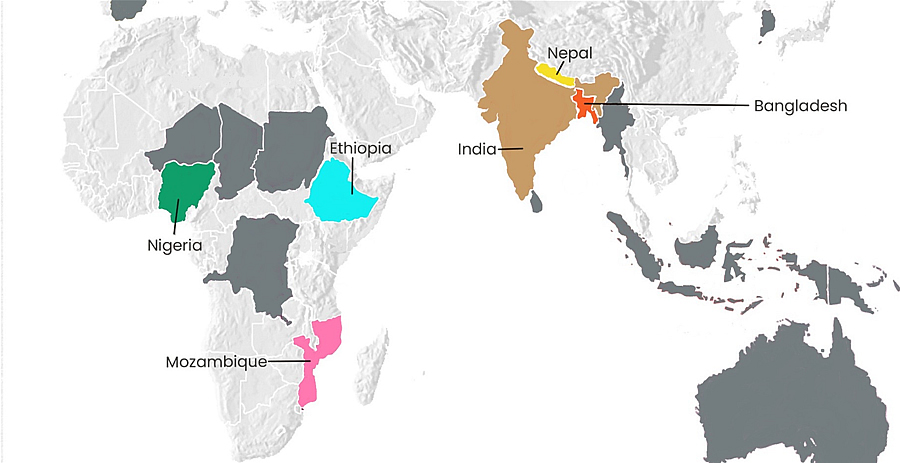
Click on the name of a country on the map or the list below to find out more.
Bangladesh | Ethiopia | India | Mozambique | Nepal | Nigeria
Mozambique
Mozambique is ranked 182nd out of 193 countries in the latest Human Development Index. Access to healthcare and schooling is extremely limited, especially in rural areas, and as of 2023, 62% of Mozambique’s population are considered to be living in extreme poverty.
On top of this, conflict continues to affect northern provinces of Mozambique, while extreme weather events like flooding and cyclones, are becoming more frequent throughout the country due to climate change.
Leprosy in Mozambique
In 2024, 2,863 people were diagnosed with leprosy in Mozambique (6th highest globally). 223 of these cases were children under the age of 15, indicating the disease is still spreading fast in communities. Furthermore, 412 (14%) had already developed severe visible disabilities by the time they were diagnosed, indicating late detection.
In late 2025, with the support of Irish Aid, TLM Northern Ireland began working with TLM Mozambique on Project Olikanassa.
Olikanassa, which means the state of being equal in status, rights, or opportunities in the local language Makuhwa, will empower women, girls and families disadvantaged by leprosy, disability, climate change, gender injustice and extreme poverty and provide them with access to improved healthcare services and opportunities to build climate-resilient livelihoods.
To achieve this, project activities are focussing on:
- Strengthening Health services: Government health workers are being trained, thus increasing expertise within local health systems. Mobile skin camps are helping to diagnose suspected leprosy cases earlier and are referring complex cases for further treatment. Communities and school children are receiving education on leprosy and other skin NTDs (Neglected Tropical Diseases) to increase awareness and knowledge of leprosy, other prevalent diseases, and good health care practices.
- Empowering Women and girls: Through Olikanassa, women and girls are receiving education on climate change and health rights, empowering them to make informed decisions about their well-being. Men and boys are also being engaged to encourage more supportive relations within family dynamics and their support of women in leadership. At the same time, women and girls are receiving support in leadership development, helping them to have a voice in local health and climate mitigation decision-making, and enabling them to participate in the running and governance of Organisations for Persons with Leprosy (partners in Olikanassa).
- Adaptive and climate resilient livelihoods: Women and men are being trained in climate-smart agricultural practices to help build climate resilient livelihoods and increase food security, and to improve nutrition across communities. Women and men are gaining access to seeds and tools through partnerships with cooperatives, while savings groups are being supported to empower people to develop financial independence.
Our work in Mozambique is supported by